The Power of 342 Words
June 7, 2026

There’s a scene I’ve been thinking about since I wrote it.
It’s 342 words. It takes place in a convenience store. A man walks in. Tries to buy a bottle of water. Leaves.
Nothing happens. Everything happens.
I’ve been asked a few times how Literary-Fusion actually works at the sentence level — not as philosophy, but as craft. What does recognition without instruction look like inside an actual scene?
342 words is my answer.
The form is built around a single commitment: the reader completes the experience from their own interior. Not from mine.
I don’t tell the reader what to feel. I don’t guide them toward the correct interpretation. I create conditions. They bring everything else — their own history, their own unfinished business, their own version of a day that wouldn’t cooperate.
This isn’t a stylistic preference. It’s a structural decision made before the first sentence.
And 342 words is enough to show what that decision produces.
The following is an excerpt from Nobody Is Born a Lemming, forthcoming.
Ari pulled into a convenience store a few blocks away and parked without straightening the car.
Inside, everything came at him at once.
Color. Noise. Screens flashing numbers and jackpots. Music playing too loudly for the size of the room. Cardboard displays crowded the floor with chips stacked at angles that felt intentional.
He stopped just past the door, then kept moving so he wouldn’t be in the way.
The cooler doors ran the length of one wall, each section shouting something different. Two-for-one. Limited time. New flavor. He stood there longer than necessary, trying to decide between identical bottles that promised different things.
A woman reached in beside him without asking. Her sleeve brushed his arm.
“Sorry,” she said, already gone.
“It’s fine,” Ari said, quick and loud enough that it sounded wrong.
She glanced back, then nodded and turned away.
At the counter, the register beeped in short, sharp bursts. The clerk finished with the customer ahead of him, sliding change across without looking up.
Ari set the bottle down.
“That’s two for five,” the clerk said.
“I just want one,” Ari said.
The clerk paused, fingers still on the screen. “It’s cheaper if you get two.”
“I don’t need two.”
The clerk looked at him then. Not annoyed. Just checking.
Behind Ari, someone shifted. A display rattled slightly as a shoulder bumped it.
“Okay,” the clerk said, tapping the screen. “Three ninety-nine.”
Ari handed over a bill. The clerk counted the change back slowly, deliberately, each coin placed flat on the counter.
Ari picked them up too fast. One slipped and rolled toward the edge. He caught it with his palm and closed his hand around it until it stopped moving.
Outside, he leaned against the car and twisted the cap off the bottle. Took a sip that didn’t help.
He set it on the roof, got in, then reached back out to grab it again when he heard it slide.
As he pulled away, the bottle tipped onto its side against the passenger door.
He left it there.
Inside that scene there are no fewer than thirty discrete interpretation variables. Each one carries multiple possible readings.
A gesture that reads as patience to one reader reads as condescension to another. A refusal that reads as stubbornness reads as the only completed decision a man has made all day. A coin that slips and gets caught — held until it stops moving — reads as control, or fear, or the body finishing what the mind no longer can.
No reading is wrong. No reading is mine to assign.
When you apply the actual combinatorics — thirty variables, multiple readings each, sequentially dependent, multiplied against the distorted perception every human reader brings to the page — the number of unique impact paths through 342 words exceeds 200 trillion.
I’m not offering that number as a marketing claim. It’s what the math produces when you take the form seriously.
And it doesn’t account for the re-read. The same reader, returning after the last page, resolves every variable differently. The scene they read the first time no longer exists. A new one has taken its place.
Finite text. Infinite effect.
This is what I’m building toward — not at the level of theme or arc or intention, but at the level of the sentence. The word. The coin placed flat on the counter.
The reader who finds that scene in the published work will know exactly what this was about. That was always the point.
Artist Note
In Literary-Fusion, the math is not here to prove anything. Proof is not the point. It is one more variable in the passage through the art, another way the reader enters it and carries it forward through thought, memory, and feeling. That is how the form lives. That is how it moves.
And if every reading changes the reader, what is the story completing?
This essay is part of the Foundation Essays — the philosophical base of the Literary-Fusion framework.
About the Author
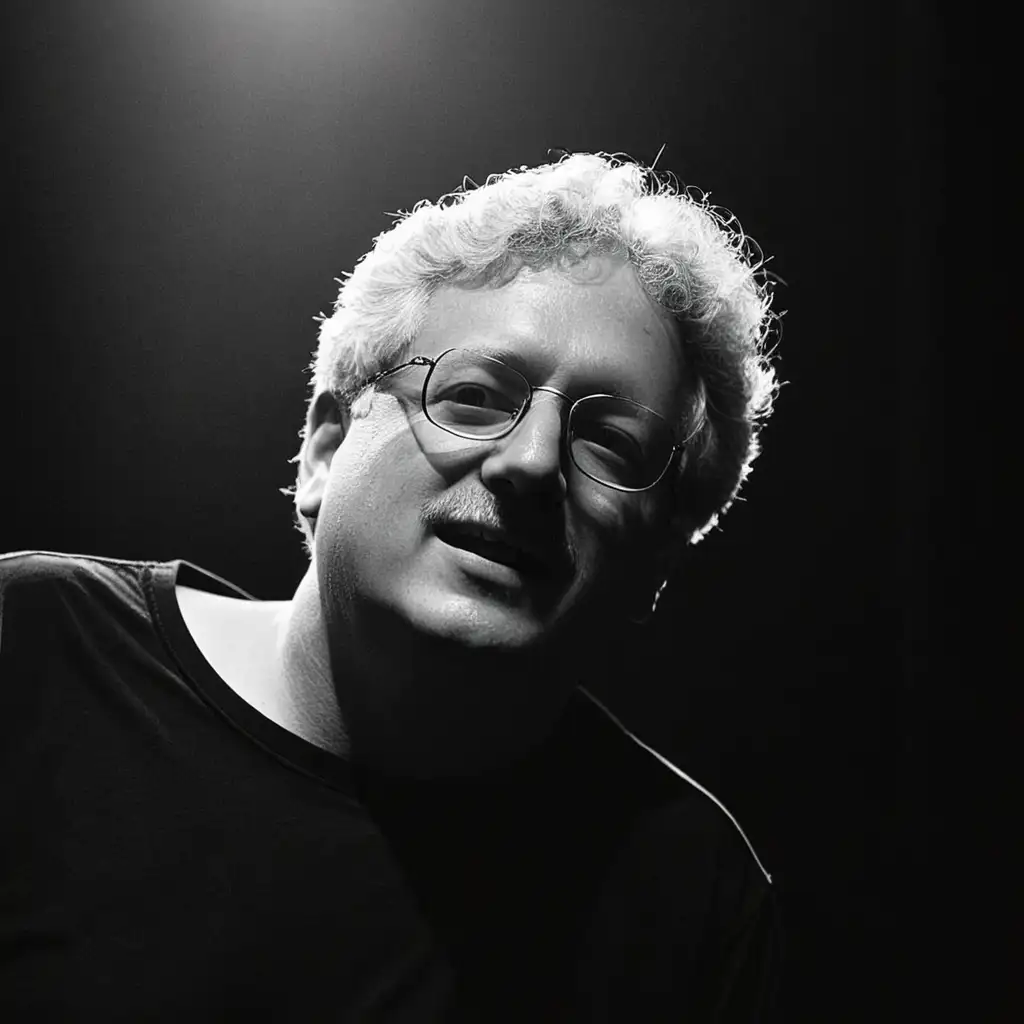
I’m S. Bobby Alexander. I write stories and reflections about the signals we follow, the threads we carry, and the echoes that stay with us. At the heart of my work is a conviction: the stories you carry shape the life you live. The stories you share shape the lives around you.
Every piece is an invitation to notice sparks, listen for echoes, and find the courage to follow the threads that matter most. If this essay left something with you, I’d love to hear it — share a reflection, or carry it forward in your own way. Stories aren’t just written. They’re lived, and passed on.
Experience Literary-Fusion in the novels: The Literary-Fusion Series
Literary-Fusion — The reader completes the story.
Share This Post